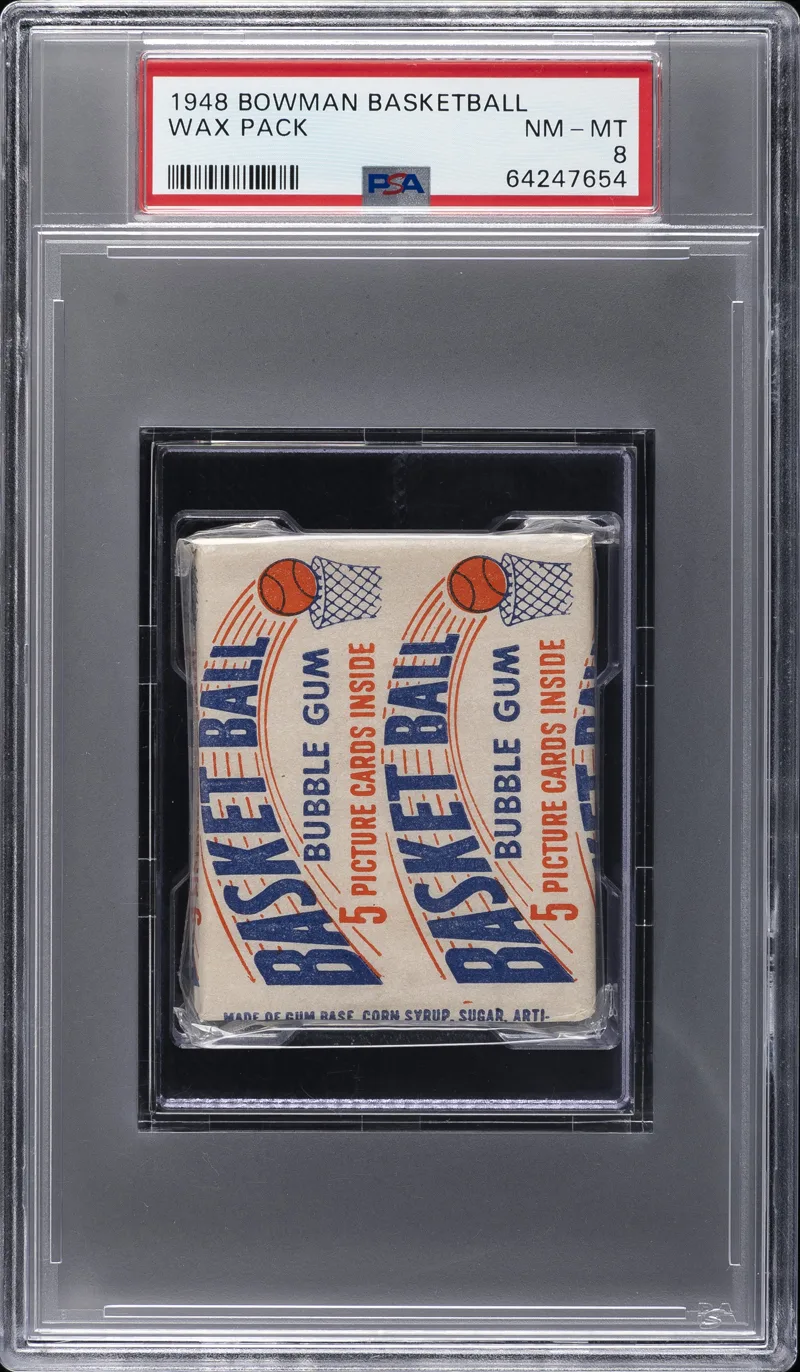
Collecting History: The Enduring Legacy of 1948 Bowman Cards and Their Market Return
In the vibrant world of sports memorabilia, few items capture the imagination quite like vintage trading cards. They are not merely pieces of cardboard; they are tangible fragments of history, encapsulating the genesis of beloved sports and the legends who shaped them. Among these cherished artifacts, the 1948 Bowman Basketball set holds a particularly revered place. As these rare gems increasingly resurface on the market, sparking renewed collector interest, we witness a genuine bowman basketball rückkehr – a return of unparalleled historical significance to the forefront of the collecting community.
This iconic set offers a direct window into the nascent years of professional basketball, predating the modern NBA as we know it. For enthusiasts and investors alike, the "return" of these cards represents not just an opportunity to own a piece of the past, but a chance to preserve the foundational moments of a global phenomenon.
A Glimpse into Basketball's Genesis: The 1948 Bowman Set
To truly appreciate the 1948 Bowman Basketball set, one must first understand the landscape from which it emerged. The professional basketball league we celebrate today began its life in 1946 as the Basketball Association of America (BAA). For three formative years, the BAA laid the groundwork before merging with the National Basketball League (NBL) in 1949, officially forming the National Basketball Association (NBA).
The 1948 Bowman set stands as a profound testament to this transitional era. Issued in two distinct series of 36 cards each, it is packed with pioneers from the BAA. What makes these cards uniquely understated and compelling is their design: a simple, colored-in black-and-white player picture set against a solid, often vibrant background. Strikingly, there are no player names or team logos on the front, forcing the viewer to focus solely on the athletes themselves – the earliest stars before they became household names. This minimalist approach, while seemingly humble, imbues the cards with an almost timeless quality, a raw authenticity that perfectly mirrors the rugged, foundational years of the league.
The second series of these cards is notoriously difficult to locate, adding another layer to their mystique and value. Their scarcity is a direct reflection of their age and the collecting habits of the time, making any sighting a significant event for serious collectors tracking the bowman basketball rückkehr.
The Rarity and Allure of Vintage Bowman Cards
Collecting items from the 1940s naturally comes with inherent challenges. Over the past seven decades, countless 1948 Bowman cards have been lost to time, damaged by neglect, or simply discarded. This attrition has created an acute scarcity, transforming surviving examples into highly coveted treasures. This historical erosion is precisely why the "return" of any 1948 Bowman card to the market generates such excitement.
The journey of these cards, from humble origins to their status as blue-chip collectibles, underscores the importance of preservation. Today, when the best 1948 Bowman Basketball cards re-enter the market, they are almost invariably "wrapped in a graded slab." This process, carried out by professional grading services, serves multiple vital functions:
- Authenticity: It provides a crucial layer of verification, helping collectors avoid the fakes and forgeries that have unfortunately become prevalent in the vintage card market.
- Condition Assessment: A numerical grade objectively assesses the card's state, directly impacting its market value.
- Protection: The sealed slab offers physical protection, safeguarding these delicate pieces of history for future generations.
For collectors, understanding the nuances of grading is paramount. An ungraded card, even if seemingly in good condition, will always command a lower price than its graded counterpart due to the inherent risks of authenticity and condition subjectivity. As more collectors seek to uncover these historical artifacts, the demand for professionally authenticated and graded cards will only continue to rise, fueling this continuous bowman basketball rückkehr.
You might be interested in delving deeper into the history of these iconic cards. Explore their origins and impact further by reading Bowman Basketball: The Return of Lost Vintage Gold.
Legendary Players Leading the "Rückkehr" (Return) to Market
The true value and appeal of the 1948 Bowman set lie not just in its rarity, but in the caliber of players it features. This set is a veritable who's who of early professional basketball, featuring numerous Hall of Famers and foundational figures. Their cards, when they make their market comeback, are truly historic events:
- George Mikan #69: Perhaps the most dominant player of his era, Mikan's card is often considered the crown jewel of the set. He won seven NBL, BAA, and NBA championships, and was so dominant that the rules of the game were literally redefined to contain him. His card's re-emergence is always a headline event, signifying a significant bowman basketball rückkehr for a true icon.
- Joe Fulks RC #34: Hailed as "the Babe Ruth of basketball" and often credited as the "father of the modern game," Fulks revolutionized scoring, setting single-game records four times. His rookie card, though not always the most expensive in lower grades due to many early collectors holding onto copies, remains a profoundly significant piece of sporting history and a cornerstone for any vintage collection.
- Ernie Calverley RC #1: As a rookie, Calverley led the BAA in assists per game for two seasons with the Providence Steamrollers and was named to the All-BAA Second Team. His card, featuring a deep blue background, represents a clear step up in value for vintage collectors, especially given his leadership in the league's earliest statistical categories.
- Jack Dwan #51: A key player for the precursor to the LA Lakers, Dwan won NBL and BAA championships. His card, with its simple blue background, doesn't appear for sale often, making its infrequent appearance a notable "return" for collectors seeking completion.
- Herman Schaefer #62: Playing in both the NBL and NBA, Schaefer’s card is notable for detailing his many scoring achievements on the reverse. Ungraded versions offer a more affordable entry point into this legendary set, making it accessible for a wider range of collectors witnessing the cards' return.
Each of these cards, and indeed every card in the set, carries a story – a fragment of professional basketball's formative years. Their reappearance on the market is more than a transaction; it's a re-telling of history, a fresh opportunity for new generations of collectors to connect with the game's past.
Navigating the Market: Tips for Collectors
The excitement surrounding the bowman basketball rückkehr of these vintage cards is palpable, but approaching the market requires a strategic mindset. Here are practical tips for collectors:
- Do Your Research: Before making any purchase, thoroughly research the specific card, its recent sales history, and the reputation of the seller. Platforms like eBay are common marketplaces for these cards, but buyer diligence is crucial.
- Prioritize Graded Cards: Especially for high-value cards like Mikan or Fulks, insist on professionally graded examples (PSA, SGC, BGS are common grading companies). This protects your investment from counterfeits and provides an objective assessment of condition.
- Understand Condition vs. Price: A high-grade 1948 Bowman card will command a premium. While lower-grade cards are more affordable, understand that significant flaws (creases, stains, soft corners) will substantially impact value. Decide whether you prioritize owning a high-condition piece or simply a historical artifact.
- Set a Budget: These cards can be expensive. Determine your budget in advance and stick to it. Collecting vintage is a marathon, not a sprint.
- Connect with the Community: Join online forums, social media groups, and local collecting clubs. The vintage card community is often very knowledgeable and can offer valuable insights, advice, and even leads on authentic cards.
- Consider Long-Term Value: The 1948 Bowman set represents a unique investment opportunity. As the NBA's global popularity continues to surge, so too will the appreciation for its earliest artifacts. Holding onto these cards isn't just collecting; it's preserving a legacy with potential financial upside.
For an in-depth look at the BAA era and its lasting impact on basketball card collecting, dive into Journey Back: 1948 Bowman Basketball's BAA Era Legacy.
Conclusion: The Enduring Appeal of History's Return
The concept of a bowman basketball rückkehr is more than just a literal translation; it embodies the continuous re-discovery and re-appreciation of a pivotal era in sports history. The 1948 Bowman Basketball set stands as a monumental collection, offering collectors an unparalleled connection to the very origins of professional basketball. Each card, from the celebrated George Mikan to the trailblazing Joe Fulks, tells a story of perseverance, innovation, and the nascent stages of a global phenomenon. As more of these incredibly rare and historically significant cards make their way back into the public eye, they reignite passion, inspire new collectors, and solidify their place not just as sports memorabilia, but as vital historical documents. Their enduring appeal ensures that the story of basketball's beginnings will continue to be told, one cherished card at a time.