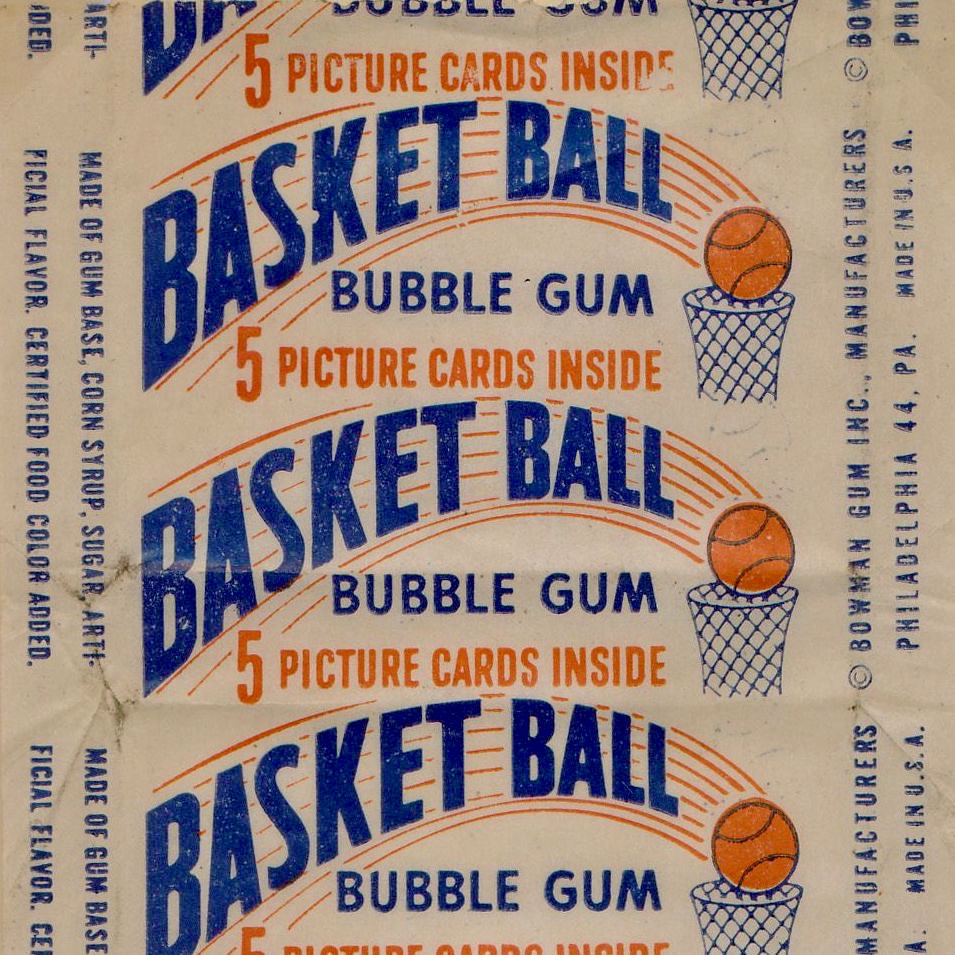
Journey Back: The Enduring Legacy of 1948 Bowman Basketball and Its BAA Era Stars
The world of sports card collecting often involves chasing the latest releases, but sometimes, the most profound joy comes from a journey back in time. For basketball enthusiasts and vintage card collectors, this journey invariably leads to the iconic 1948 Bowman Basketball set. More than just a collection of cards, this set serves as a tangible link to the very genesis of professional basketball as we know it, representing the formative years of the Basketball Association of America (BAA) – the precursor to today's NBA. The sustained interest in these historical artifacts marks a significant cultural phenomenon, a continuous "bowman basketball rückkehr" (return) of these foundational pieces into the spotlight, reminding us of the game's earliest legends.
The Dawn of an Era: Unveiling the BAA's First Stars
Before the NBA became a global powerhouse, it began its life in 1946 as the Basketball Association of America (BAA). For three pivotal years, this league laid the groundwork for modern professional basketball, eventually merging with the National Basketball League (NBL) in 1949 to form the NBA. It was during this nascent period that Bowman, a name now synonymous with sports cards, released its groundbreaking 1948 Basketball set. This collection uniquely encapsulates the BAA era, focusing almost exclusively on the pioneering players who graced its courts.
What makes these cards stand out beyond their historical significance is their remarkably understated design. Unlike today's elaborate, photo-realistic cards, the 1948 Bowman series features stylized, colored-in black-and-white player pictures set against a solid, often vibrant, background. Strikingly, these cards intentionally omitted player names or team logos on the front, placing the sole emphasis on the athletes themselves – the nascent stars of a sport still finding its footing. This minimalist approach ironically amplifies their historical weight, forcing collectors to connect directly with the image of the player who helped shape the game. Every time a new collector discovers these cards, it's a personal "bowman basketball rückkehr" to the origins of a beloved sport.
A Closer Look at the 1948 Bowman Set: Structure, Scarcity, and the "Rückkehr" of Value
The 1948 Bowman Basketball set was issued in two distinct series, each comprising 36 cards, for a total of 72 cards. However, the second series is notoriously much harder to locate, adding an extra layer of challenge and allure for dedicated collectors. This scarcity, combined with the passage of over 70 years, means that many of these cards have unfortunately been lost to time or fallen victim to the elements. The fragility of paper and the casual attitude towards collecting in the mid-20th century have made high-grade examples exceedingly rare and highly coveted.
This scarcity directly contributes to the concept of a "bowman basketball rückkehr" in the market. Each time a well-preserved card from this set surfaces, it represents a significant event, bringing a piece of lost history back into circulation. For collectors today, navigating the vintage market requires diligence. The best 1948 Bowman Basketball cards are almost invariably found encased in a graded slab from reputable authentication services. This not only confirms their authenticity but also protects them from further damage and provides a standardized measure of condition. Furthermore, grading is crucial for safeguarding against the fakes and forgeries that have, unfortunately, made their way into the market over the decades. When a pristine, graded card makes its "rückkehr" to an auction block or a collector's display, its value often far exceeds that of its ungraded counterparts. For more on how these vintage pieces are re-entering the market, check out
Collecting History: 1948 Bowman Card Returns to Market.
Iconic Figures: The Legacy Embodied in Cardboard
The 1948 Bowman set is a treasure trove of early basketball legends, featuring numerous Hall of Famers and pioneering rookies. These cards aren't just paper and ink; they are miniature biographies of the individuals who built the foundation of professional basketball. Owning one is like holding a piece of living history, a direct connection to the "bowman basketball rückkehr" of these heroes into our modern consciousness.
Let's delve into some of the most sought-after cards and the legends they represent:
*
Joe Fulks RC #34: The "Babe Ruth of Basketball"
Many consider Joe Fulks the "father of the modern game." He revolutionized scoring, setting the BAA/NBA single-game scoring record an astonishing four different times. His aggressive, high-volume shooting style was unprecedented for its era, earning him the moniker "the Babe Ruth of basketball." For early collectors, Fulks was a household name, meaning many held onto his card. While this might make lower-grade versions more accessible, his rookie card remains an indispensable piece of sporting history and a cornerstone of the 1948 Bowman set. The excitement around his card's "rückkehr" to the market is always palpable.
*
George Mikan #69: The Dominant Force
Despite his relatively late entry into the BAA/NBA after dominating the NBL, George Mikan's impact was immediate and profound. "Mr. Basketball" was so dominant that the league literally changed its rules to mitigate his overwhelming advantage (introducing the foul lane widening and the shot clock). He led his teams to seven NBL, BAA, and NBA championships, earned three scoring titles, and was a fixture in early All-Star and All-NBA teams. His card, though not a rookie in the strictest sense for the BAA, is arguably the most iconic and valuable in the set, representing a singular force that reshaped the game. Mikan's legacy ensures a constant "bowman basketball rückkehr" of his card to the forefront of vintage collecting discussions.
*
Ernie Calverley RC #1: The Assist King
Ernie Calverley holds the distinction of being card #1 in the set, a prime spot for his rookie card. Playing for his home state Providence Steamrollers, Calverley led the BAA in assists per game in both the league's first and second years. His impressive debut season also saw him selected to the All-BAA Second Team. As the 1944 NCAA Division I scoring leader, Calverley's talent was undeniable, making his card a popular choice for vintage card collectors. His card, often featuring a deep blue background, is a clear step up in value from many others, symbolizing the "rückkehr" of early playmakers into the historical narrative.
*
Jack Dwan #51: A Champion's Card
Jack Dwan played two seasons in the NBL and BAA (1947–49), notably for the Rochester Royals and Minneapolis Lakers. A true champion, Dwan won an NBL championship in 1948 and followed it up with a BAA championship in 1949 as a member of the Lakers – the precursor to the legendary Los Angeles Lakers franchise. His card, often featuring a simple blue background, doesn't appear for sale as frequently as some others, adding to its mystique and making its "rückkehr" to the market an event for collectors.
*
Herman Schaefer #62: From Player to Coach
Herm Schaefer had a lengthy career spanning the NBL and NBA from 1941 to 1950. While his card's reverse lists his many scoring achievements, Schaefer's impact extended beyond his playing days, as he later went on to coach the Indianapolis Olympians. Ungraded versions of his card often represent some of the more affordable entry points into the 1948 Bowman set, offering collectors a chance to own a piece of this early history without the premium associated with top-tier legends.
Collector's Insights: Ensuring a Successful "Rückkehr" to Your Collection
For anyone aspiring to add these magnificent pieces of history to their collection, a few practical tips can ensure a rewarding "bowman basketball rückkehr":
1.
Do Your Homework: Research individual player values, card conditions, and market trends. Understand the nuances of the two series and their respective rarities.
2.
Prioritize Grading: For significant purchases, always opt for professionally graded cards. This protects your investment and provides peace of mind regarding authenticity and condition.
3.
Seek Reputable Sellers: Purchase from established dealers, auction houses, or online platforms with strong reputations and clear return policies.
4.
Set a Budget: These vintage cards can command high prices, especially for key players and high grades. Determine what you're willing to spend and stick to it.
5.
Enjoy the History: Beyond the monetary value, remember the incredible story each card tells. You're collecting a tangible piece of basketball's foundation.
The allure of the 1948 Bowman Basketball set is not just in its rarity or value, but in its profound historical significance. It's a vivid snapshot of basketball's formative years, capturing the essence of the BAA era and its pioneering athletes. Each card is a miniature portal to the past, allowing modern collectors to connect with the very roots of the game. For enthusiasts, the sustained fascination and market activity surrounding these cards represent a powerful and ongoing "bowman basketball rückkehr" – a continuous re-discovery and celebration of lost vintage gold. For a deeper dive into this phenomenon, explore
Bowman Basketball: The Return of Lost Vintage Gold.
In conclusion, the 1948 Bowman Basketball set remains a cornerstone of sports card collecting. Its simple yet iconic design, coupled with its direct link to the BAA and its legendary pioneers, ensures its enduring appeal. The consistent "rückkehr" of these cards to the market and into new collections reaffirms their status not just as collectibles, but as cherished historical artifacts, connecting us to the foundational moments of one of the world's most beloved sports.